


Canadian Online Pharmacy

NCTR Quarter Page Newsletter: Oct. 2012-Jan. 2013

National Center for Toxicological Research (NCTR) Logo

Quarter Page

Research Highlights, Activities, and Publications                             Volume 7, Issue 1:  Oct 2012-Jan 2013

3rd Annual Global Summit

Request information about FDA/NCTR's 3rd annual Global Summit on Regulatory Science that brings together an international body to discuss innovative technologies and partnerships that enhance translation of basic science into regulatory applications. The 2013 Summit is scheduled to be held in September in Little Rock, Arkansas.


FDA and NIEHS Celebrate 20 Years

National Institute of Environmental Health Sciences

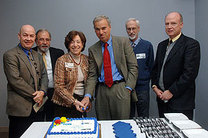
The 20th anniversary of the Interagency Agreement between FDA and NIEHS was celebrated on Nov 14, 2012. NCTR and the NIEHS National Toxicology Program (NTP) are the key participants in the IAG. Over the past 20 years, NCTR has conducted toxicological assessments of chemicals or substances that are of regulatory interest to FDA with resources provided by NTP. This collaborative effort has resulted in 19 technical reports, over 220 scientific publications, and hazard assessment data used by agencies worldwide.

FDA/NCTR and NIEHS/NTP staff celebrating 20-year anniversary of partnership.

Left to right: Nigel Walker, Ph.D, (current IAG NIEHS Project Officer), William Allaben, Ph.D. (past IAG NCTR Project Officer), Linda Birnbaum, Ph.D., D.A.B.T., A.T.S. (NIEHS Director), Jesse Goodman, M.D. (FDA Chief Scientist), John Bucher, Ph.D. (Associate Director of NIEHS/NTP) and Paul Howard, Ph.D., (current IAG NCTR Project Officer). 

medicine cabinet

Assessing Drug-Induced Liver Injury (DILI) Using the "Rule-of-Two"  

Scientists from NCTR and Hannover Medical School analyzed 164 FDA-approved oral medications and have shown an association of high daily doses (≥ 100 mg/day) and lipophilicity (partition coefficient, logP ≥3) with significant risk for DILI; thus defining a “rule-of-two.” This principle was further applied and verified using an independent set of 179 oral medications, drug pairs with similar chemical structures and molecular targets but different DILI potential, and in clinical case studies with complex co-medication regimes. The “rule-of-two” is an appropriate means of estimating risk for DILI compared to dose alone and could help support regulatory applications. A manuscript detailing this study has been accepted for publication in Hepatology.


Carcinogenicity of Acrylamide

French Fries

Scientists from NCTR and Portugal's Centro de Quimica Estrutural, Instituto Superior Tecnico have shown that acrylamide has clear carcinogenic activity in rodents from a two-year drinking water study. Acrylamide administration produced dose-dependent increases in tumors at multiple organ sites in male and female mice and rats. Based on these data, the World Health Organization concluded that acrylamide in food is of public health concern. Acrylamide is found in many foods that are prepared by high-temperature frying, baking, or roasting.  Additional exposures to acrylamide occur from smoking cigarettes and occupational exposure. This study was supported through NCTR's Interagency Agreement with NIEHS/NTP. A manuscript describing this study was accepted for publication in Food and Chemical Toxicology.

resource book

View NCTR's Recently Accepted Scientific Publications


Nanotechnology Collaborations

The Arkansas Research Alliance (ARA) applied to the FDA Broad Agency Agreement (BAA) contract call for innovative research in support of the FDA Strategic Plan for Regulatory Science. ARA engaged five Arkansas colleges to develop a research plan that was a successful applicant to the BAA process. The collaborating colleges receive funding via the BAA and are working in conjunction with NCTR (who receives no funding from the BAA) to conduct studies that will synthesize the carbon-based nanomaterials similar to those anticipated to be found in FDA-regulated products. The partners are working to develop sensitive methods for quantifying nanomaterials and provide quantitative information for FDA to use in regulatory decision making.


Bioinformatic Tools

FDALabel logo

FDALabel, a full-text search of Drug Label Database is a web-based application developed at NCTR that can be used to query a database of more than 40,000 drug labels. The source of FDALabel’s data is the Structured Product Labeling archive of DailyMed that is maintained by the National Library of Medicine. Learn more about FDALabel and NCTR's other Bioinformatic Tools.


NCTR in the Press ...

FDA/NCTR research acknowledged as "... ground breaking, world-class science that illuminates not just the role of BPA, but the future of toxicological research."  Read more on Forbes.com. 


This email was sent to kostikblog@ukr.net using GovDelivery, on behalf of: U.S. Food & Drug Administration (FDA) · 10903 New Hampshire Ave · Silver Spring, MD 20993 · 800-439-1420 Powered by GovDelivery